
Wednesday, October 30, 2013
Exposure
Back in 2009, Obama made a promise to the American people, referring to what would soon be known as the Obamacare, making health insurance affordable to all. Obama stated, "Here’s a guarantee that I've made. If you have insurance that you like, then you will be able to keep that insurance. If you've got a doctor that you like, you will be able to keep your doctor." According to the article, "Clarence Page: Obama Told "One Of Those Political Lies" About Health Insurance," Clarence Page defends Obamacare and yet justifies that Barack Obama did lie although he states that it was "one of those political lies." Although a supporter of Obamacare, his positive opinion on Obama's broken commitment to the people of America seems to persist. And although, the reporter (Hugh Hewitt) tries to insist that what Obama has done is something that the American public may disapprove Page continues avoiding the subject because these lies through politics are "regular" "common" and people should be "used" to them. It's amusing.. well not really, its bit annoying how lies easily slip in the politcal world and many other places. I get it, you want to get better results for a better good, but once oyu make a commitment and it has been recorded you're done, you cannot change it or else you deceive he peopel and yourself on your promise. And someone accepts that this is...reasonable. I dislike the liar but I am frustrated and provoked at those who accept these broken promises. Although in the end Page clears up the details with the reporter by stating "Well, a lot of things bother me more than that, but not because of overselling his program. Every president oversells their programs. But just the fact that the whole process of putting Obamacare together disturbed me that he gave up too much early on, in my view." Though I know there would be others who would not follow such beliefs.


Thursday, October 24, 2013
Girls like English Boys like Math

AP, Advanced Placement classes, meant for the scholarly student that are assumed to gain broad knowledge about a subject. The Princeton Review, the company who writes the books for these AP students, are known for their success and deemed as "flawless." With The Princeton Review's version on AP tests anyone can get a higher score, right? Based on these covers, the AP English Literature and Composition, U.S. History, Calculus AB & BC and Physics C exams are focused for a certain audience. It has usually been presumed that males were good at Mathematics and Science while the females were good at English and History. This image depicts, even now in 2013, that the belief still surges through. What strikes me that even those with and "ivy league" title were careless/ignorant enough to portray their covers as such. Another thing to notice is the people's position. The women seem reserved, shy if you may, merely concealing their pride and the men in the other hand seem to be more open and prideful.. All are smiling at least. It is just quite intriguing how even if through our conscious or unconscious decisions we tend to classify roles to certain sexes. It's amazing how sexism runs society.
Thursday, October 10, 2013
Infierno
I am in the darkness. It's not cold.They had learned the cold was not a torturous temperature for we eventually become numb. Its not hot. They learned that the heat scorched our senses in the same way the cold numbed them.We're melting. Then they freeze us. Then they melt us again. We can never adjust to the environment and this is just part of the physical torture.
We were tricked. We were deceived. We thought we were led to heaven. We did not know that Satan was a beautiful creature. He allured us into the depths of hell. He was the fallen angel, Lucifer. Whenever we got the chance we made fun of him and called him Lucy but when we were caught we were stuck in the realm of hallucination. We were back into the living world and we were betrayed in the worst way possible. I guess he was stating that even Jesus, the one who was betrayed, was us and that we did not have the ability to escape after three days and resurrect. We were stuck in that realm for three eternities instead. I was there with my family. I loved them they did not love me. They sent me away and instead I was tortured. I was twisted until my bones flew out. I was given false hope that they would save me and love me again.
In hell you get used to the torture. It still hurts everyday but you forget what you once considered yourself, a human soul. That is when you enter the next level as a demon. They are all psychopaths. You don't want to become one of them, they are the devil's minions. They lose all sense of rationality and feeling. They only live by Satan's command and they cannot even sense a will anymore. My father has become a minion. I visit him daily, always hoping he will remember me. He does not. Instead he eats the devours the flesh of creatures. As he was morphing into a minion he was dying. It hurt him so much. It was painful. I hated hell. They say once you start talking in past tense that those are sign that you are becoming a minion. I guess it is not so far because all I have left of my soul are images of torture.
I am starting like it here.

We were tricked. We were deceived. We thought we were led to heaven. We did not know that Satan was a beautiful creature. He allured us into the depths of hell. He was the fallen angel, Lucifer. Whenever we got the chance we made fun of him and called him Lucy but when we were caught we were stuck in the realm of hallucination. We were back into the living world and we were betrayed in the worst way possible. I guess he was stating that even Jesus, the one who was betrayed, was us and that we did not have the ability to escape after three days and resurrect. We were stuck in that realm for three eternities instead. I was there with my family. I loved them they did not love me. They sent me away and instead I was tortured. I was twisted until my bones flew out. I was given false hope that they would save me and love me again.

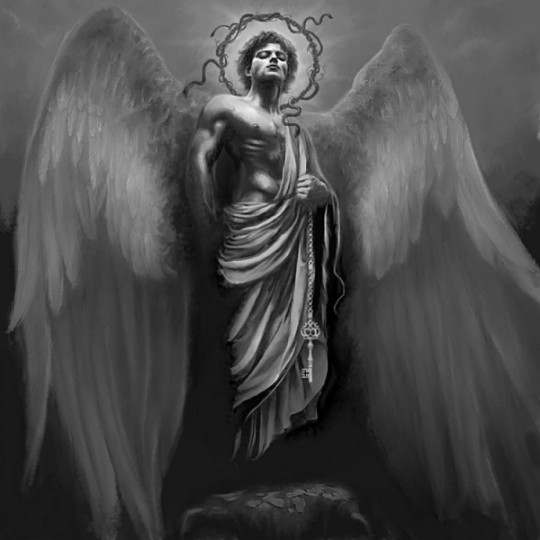
In hell you get used to the torture. It still hurts everyday but you forget what you once considered yourself, a human soul. That is when you enter the next level as a demon. They are all psychopaths. You don't want to become one of them, they are the devil's minions. They lose all sense of rationality and feeling. They only live by Satan's command and they cannot even sense a will anymore. My father has become a minion. I visit him daily, always hoping he will remember me. He does not. Instead he eats the devours the flesh of creatures. As he was morphing into a minion he was dying. It hurt him so much. It was painful. I hated hell. They say once you start talking in past tense that those are sign that you are becoming a minion. I guess it is not so far because all I have left of my soul are images of torture.
I am starting like it here.
Thursday, October 3, 2013
Empathy
I have been often been called kind. I never thought myself of this; I thought I was just the average human being, but my ethics are different from others. I have often found myself unconsciously picking up an object someone has dropped and returning it to them and though I usually get a grunted thanks; I still feel good. Nowadays this is seen as empathetic/kind, but I wonder if I do it for others or myself. I don't know if my conscience wants me to give/ help others because I feel guilty or if I truly want to help the other person. I honestly don't know if I believe "our generation" has become less empathetic but if I had to state my side I would think we have. The pressure of rising and being the best has made us topple through some obstacles and made us colder, I suppose in order to not regret our decisions.
I feel as if empathy has become an artificial emotion. It's something you do because it's part of "human nature." We are born with it I suppose, but will we trigger the emotion? If people have begun to mistrust the empathy then that means that they themselves have experienced or gone through a certain situation to feel that the lack of empathy has affected them or others negatively. For example if we are given a list on when we should use sympathy, although it comes "naturally," that must indicate a growing lack of empathy. It's like a guide on how to be human.
But I feel that this only applies in certain places, especially in the USA where the "American dream" forces us to try our best and think in a capitalistic manner where we have to beat others in order to be ahead. like the comment in article of "What, Me care? Young Are Less Empathetic" states: Population pressure reduces empathy. Now the question is where does that pressure come from, until where can we trace the pressure back to, how far back must we go until empathy was a factor of a human trait rather than a trait that is recognized as a "rare" aspect that makes you a good human being. When did we become so disconnected?
http://www.ncbi.nlm.nih.gov/pmc/articles/PMC2877627/
I feel as if empathy has become an artificial emotion. It's something you do because it's part of "human nature." We are born with it I suppose, but will we trigger the emotion? If people have begun to mistrust the empathy then that means that they themselves have experienced or gone through a certain situation to feel that the lack of empathy has affected them or others negatively. For example if we are given a list on when we should use sympathy, although it comes "naturally," that must indicate a growing lack of empathy. It's like a guide on how to be human.
But I feel that this only applies in certain places, especially in the USA where the "American dream" forces us to try our best and think in a capitalistic manner where we have to beat others in order to be ahead. like the comment in article of "What, Me care? Young Are Less Empathetic" states: Population pressure reduces empathy. Now the question is where does that pressure come from, until where can we trace the pressure back to, how far back must we go until empathy was a factor of a human trait rather than a trait that is recognized as a "rare" aspect that makes you a good human being. When did we become so disconnected?
http://www.ncbi.nlm.nih.gov/pmc/articles/PMC2877627/
Tuesday, October 1, 2013
Response to Kozol and Ascher
Both essays evoke a sense of sympathy/empathy, whatever one wishes to call the emotion. Using certain examples that the reader can relate to for he/she has seen on a daily basis or has simply heard about such circumstances can really make the reader sway his/her opinion on the matter. I appreciate that Kozol's essay uses more fact-based data to exemplify the illiteracy rate in the US and how it causes a lot of problems for people who struggle daily to live based on images rather than letters. I also like the more personalized examples on Ascher's essay which bases her viewpoint based on personal experience. Both essays make strong points. They both show a sense of empathy although one, like the title says, focuses on what is compassion and Kozol's essay focuses more on sympathy. The "On Compassion" essay "asks" the reader to differentiate between the emotions of pity, care and compassion because it seems that often these feelings overlap or we simply do not take into consideration as to the reason why we do such actions as in "giving money." "The Human Cost of a Illiterate Society" immediately, at least for me, made me sink in to a sense of sadness, pity and disappointment. It was more like of a "wow, really?" type of moment, rather than the Ascher essay which felt more of a "oh, I do wonder if..." I do admit Ascher's essay was more thought provoking with all the rhetorical questions. Both essays do make me wonder deeper on a matter that I always consider on my sense of empathy. Especially with the homeless, what if they don't want to be pitied, as one of my teachers had taught me before, what if it's a statement that they are trying to make, or is that too broad of a generalizations.. I think so, but there are always exceptions. As I sit and type this, the Kozol essay made me wonder about who can read this, for I guess I assumed that everyone who lived in the same country as I do, knew how to read, I guess I'm ignorant and foolish for thinking that. I feel as if both essays are about having biased opinions and how eventually we just presume we know stuff that we might not.


Tuesday, September 17, 2013
That one dream
We were living in a simple house. I was nine years old. In that one house my mother did all the cleaning and cooking while my father hanged out in the dark alleys without notifying us of his whereabouts. My father ran away. He ran of with his new wife, whose nicknames "Grissy." Grissy was a very pretty lady. She had black hair, it reminded me of the sheen of a black stallion, her eyes were the brown of a caramel and the blush of her cheeks was faint but admirable. I had wished that Grissy was me and that I was Grissy, so my father could take me away. I did not want to live in that house where the peach tree sank in sorrow. The peach tree which never bared fruit.
The peach tree is where the story begin and lives end. It was surrounded by white chrysanthemums . They were beautiful, always in bloom and they would always point up straight towards my eyes looking down on them. The peach tree did not nourish much as the chrysanthemums did. The tree did not reflect the life the flowers evicted. It never bloomed its buds which turned into flowers which transformed into peaches that would eventually be picked by us or picked at by the crows. There never was a plop nor splatter of the fruit for the fruit was never there. The tree was dead; if it did not provide fruits for my mother and I to enjoy it was dead and so the tree took the dead with it.
A week later I saw my mom, she was floating off a branch of the tree. I tugged at her foot and she simply spun a little. Her foot was stiff. As a child, I knew she had died. I don't like peaches. They separated me from my mom and sent me off. Months later, after staying in that one house where all the lonely children stayed my aunt came to pick me up. She asked me to live with her and I went. Her house was very big, blue and had no peach trees; I was very happy. But soon my aunt was sent to the hospital and never came back until I saw her in the casket; my uncle angrily tossed me back in the simple house I lived in and I stayed there a few hours until my neighbor came. I was saved.
I eventually grew up in that house. I did not live there though, my life was in m,y neighbor's house, with his child, around my age, who was named Tom. Tom gave me life and while I spent my nights in torture, to try to heal myself from my backyards memento, I focused on the life in the daytime where I loved to hang out with Tom. Eventually, Tom's father told me I should continue my education and so I did. I did not only that but worked so I could eat my own food and pay my own bills. I fell in love with Tom and we got married. We moved to another city and as a memoir of my mother I planted a peach tree and surrounded it with chrysanthemums. I felt like good things had finally begun to happen. I had a child. I lost that child. Tom lost me. We lost each other. All that remained was the peach tree and myself. I then felt my mother's heart ache. I climbed up the tree and positioned the rope my mother had done so years ago. I then slid down and let myself drop. It was the end of my attempt on life. The peach tree stayed there. It eventually withered and the chrysanthemums died as well. I suppose the peach tree was my companion from the beginning.
The peach tree is where the story begin and lives end. It was surrounded by white chrysanthemums . They were beautiful, always in bloom and they would always point up straight towards my eyes looking down on them. The peach tree did not nourish much as the chrysanthemums did. The tree did not reflect the life the flowers evicted. It never bloomed its buds which turned into flowers which transformed into peaches that would eventually be picked by us or picked at by the crows. There never was a plop nor splatter of the fruit for the fruit was never there. The tree was dead; if it did not provide fruits for my mother and I to enjoy it was dead and so the tree took the dead with it.


A week later I saw my mom, she was floating off a branch of the tree. I tugged at her foot and she simply spun a little. Her foot was stiff. As a child, I knew she had died. I don't like peaches. They separated me from my mom and sent me off. Months later, after staying in that one house where all the lonely children stayed my aunt came to pick me up. She asked me to live with her and I went. Her house was very big, blue and had no peach trees; I was very happy. But soon my aunt was sent to the hospital and never came back until I saw her in the casket; my uncle angrily tossed me back in the simple house I lived in and I stayed there a few hours until my neighbor came. I was saved.
I eventually grew up in that house. I did not live there though, my life was in m,y neighbor's house, with his child, around my age, who was named Tom. Tom gave me life and while I spent my nights in torture, to try to heal myself from my backyards memento, I focused on the life in the daytime where I loved to hang out with Tom. Eventually, Tom's father told me I should continue my education and so I did. I did not only that but worked so I could eat my own food and pay my own bills. I fell in love with Tom and we got married. We moved to another city and as a memoir of my mother I planted a peach tree and surrounded it with chrysanthemums. I felt like good things had finally begun to happen. I had a child. I lost that child. Tom lost me. We lost each other. All that remained was the peach tree and myself. I then felt my mother's heart ache. I climbed up the tree and positioned the rope my mother had done so years ago. I then slid down and let myself drop. It was the end of my attempt on life. The peach tree stayed there. It eventually withered and the chrysanthemums died as well. I suppose the peach tree was my companion from the beginning.
Thursday, September 12, 2013
Celebrating December
As my brother opens the gates, Mocoñoño walks up and greets my brother while panting happily. My brother tauntingly shakes the black plastic bag filled with secrets only the children,including myself, could identify: fireworks. These are not the fireworks one who lives in the United States sees, they are not super flashy and don't fly so high up they can be seen across your city, they are small and feisty. I even remember one time my cousin, at the time my best friend, burned her finger as one, we call "cebollitas" exploded on her as she stubbornly held it to see the sparks fly in front of her. Since then , I've been scared of those little bombs.
Typically, every year, the Sotos convince whoever they can to go back to their homeland down to a small town called Zinapecuaro. For the Soto family, an activity and is infamous for its fire, sparks, burns, smiles and laughter is when the older, but adventure-filled relatives, such as my brother, go down to "el mercado" to buy a bagful or two of fireworks and the magic that results of that purchase happen in the night. The smaller of the children carelessly handle the cebollitas while the big kids ruthlessly scare the smaller children, and sometimes the adults, with the louder, smokier, and more colorful of the fireworks. I have often been scared for one time the abejita flew right in between my clumsy feet and seemed like it would cause a fire, on my shoelace. Then again, I was always the scaredy-cat of the group the one who let her imagination run wild on ideas of getting hurt, considering every single possibility. Yet, I always was deeply entertained while watching others, eventually joining in myself. I remember thinking, as we would drive into the gate of my grandmother's home how excited I was for Christmas in order to light up the fireworks. It was a time of festivity, the only time I felt I was surrounded with magic.
Even now, I love joining on the fun that I felt ten years ago. Flashing fireworks, will always flood down memories of my family coming together, without religious differences, family grudges, skin color differences tagged along with accents and cultural barriers ; the flick of the match and the roll of the lighter to set the wick on fire have always been a sign of unity.


Typically, every year, the Sotos convince whoever they can to go back to their homeland down to a small town called Zinapecuaro. For the Soto family, an activity and is infamous for its fire, sparks, burns, smiles and laughter is when the older, but adventure-filled relatives, such as my brother, go down to "el mercado" to buy a bagful or two of fireworks and the magic that results of that purchase happen in the night. The smaller of the children carelessly handle the cebollitas while the big kids ruthlessly scare the smaller children, and sometimes the adults, with the louder, smokier, and more colorful of the fireworks. I have often been scared for one time the abejita flew right in between my clumsy feet and seemed like it would cause a fire, on my shoelace. Then again, I was always the scaredy-cat of the group the one who let her imagination run wild on ideas of getting hurt, considering every single possibility. Yet, I always was deeply entertained while watching others, eventually joining in myself. I remember thinking, as we would drive into the gate of my grandmother's home how excited I was for Christmas in order to light up the fireworks. It was a time of festivity, the only time I felt I was surrounded with magic.


Even now, I love joining on the fun that I felt ten years ago. Flashing fireworks, will always flood down memories of my family coming together, without religious differences, family grudges, skin color differences tagged along with accents and cultural barriers ; the flick of the match and the roll of the lighter to set the wick on fire have always been a sign of unity.

Subscribe to:
Posts (Atom)